
Differences Between GCSE and IGCSE Grading
|
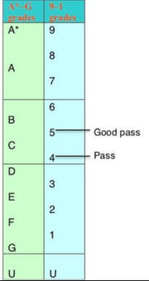
From June 2017, schools in England, UK, introduced the 9-1 grading for GCSEs to replace the *A-G grading. The numerical grades were introduced along with changes in syllabuses and to allow for greater differentiation of students at the top end of the scale.
Cambridge International has also introduced 9-1 grading for IGCSEs, but is also continuing to offer the A*-G grading as it is a familiar form of assessment in many parts of the world. Students taking their exams in countries in Cambridge Zone 3, which includes Tanzania and all East African and Southern African countries, have the option of having their papers graded either *A - G or 9 -1. The syllabuses are identical for both grading options. |
Grading Comparisons
|
Subject Information for Exams
- Exams for IGCSE English as a Second Language), French and Spanish include an oral component. You should check that the centre you have chosen will assess this.
- When you register to take your exams at your chosen registered examination centre, you will need to provide the subject course code for each of the subjects you, or your child, will be taking. Where there is a choice, both course codes are shown in our Course Pages under The Syllabus and the Exam. Students in zones other than Zone 3, may only have their exams marked A* – G. The syllabus is identical for both grading options.
READ MORE


The Latham School is a registered school with Cambridge Assessment International Education